With the Vertical FoV will definitely affect the overal feel of the total FoV.
Iirc it was a complaint with the Xtal 5k that the vertical was narrow.
With the Vertical FoV will definitely affect the overal feel of the total FoV.
Iirc it was a complaint with the Xtal 5k that the vertical was narrow.
Varjo claims 115 horizontal and 135 diagonal.
And I disagree about advertised FOV having nothing to do with real, measured FOV. The point I made previously was that if you compared advertised FOV’s from the various VR headsets against each other, the comparisons do actually roughly match reality. Except for Varjo. The advertising claims for the Aero put it into Index FOV territory, yet it actually has (had?) the smallest FOV of any headset by a substantial margin.
With the increased FOV from the update, the delta between advertised and measured FOV may be in line with other VR headsets on the market now. I’m interested to know whether that’s true.
I used the first advertised in a sense of claimed in the advertisements and the second reported in a sense of advertised by the headset (i.e. what hmdq records and the database displays).
I agree, and that’s the sense I took them in. There’s also what I’d call “measured FOV” where reviewers have measured what FOV they’re actually getting looking through the lens.
I suspect that “advertised FOV” is generally based on the panels alone from an assumed ideal position of eyeballs. It ignores the limits of the lenses and any other limitations. I don’t see any other way that a higher “diagonal” number can be claimed. This is bringing a measuring standard from TVs into VR. But it really makes no sense in VR because lenses are not rectangle shaped, and so the widest dimension of what can actually be seen is really the horizontal, not the diagonal as in TVs.
Still, this is what all companies seem to use as the basis for their advertised FOVs as far as I can tell. Whether or not any particular company agrees with measuring this way (which is clearly BS, especially the diagonal number), they have to fall in line, or they’ll be advising a relatively smaller FOV than their competitors when the device really has the same or better FOV.
The edges and especially the corners of the panels can not be seen because they’re beyond the edges of the lenses which will be roughly oval shaped. The area that can be seen is a cutout from the rectangular panels. What percentage of the panel area is able to actually be viewed varies between VR headsets. But they tend to all lose roughly around the same percentage. I think this matches more or less what you’re calling the “reported” number. Since that’s derived from the geometry of what’s actually being rendered, and it necessarily needs to match what pixels are potentially actually viewable to avoid wasting computing resources. In effect, it’s compelled to be honest.
And yet “measured” FOV can still be a different number than this due to various other factors. Particularly that the user’s IPD, how the VR headset sits on their face, and the positions of their eyeballs varies. There can be other factors that come into play, too. For instance, I think on the widest IPD setting on the Quest 2, the outer edges of the lenses end up going past the limits of the panel. So the edge of the panel, rather than the edge of the lens becomes the limiting factor in that specific case (not totally sure about this). Anyway, these kinds of things are why FOV measurements between different reviewers vary.
The upshot is that “advertised FOV” is equal to or larger than “reported FOV” which is equal to or larger than “measured FOV”. And it’s important to make sure you’re comparing the same measurement between VR headsets. If you compared measured FOV on one VR headset vs advertised FOV on another, you’re going to get a misleading result.
That Varjo was apparently able to increase their “reported FOV” with a software/firmware update is an unusual case. You wouldn’t expect that to be possible since FOV is normally fixed by the physical lens design. But this implies that the Aero was not previously making full use of the extent of its lenses. And potentially might still not be.
I’m particularly interested in this and would like to see the measured FOV reevaluated against other VR headsets again after the update. Since the previous unusually small FOV was a major factor in my decision to not purchase the Aero. This update could potentially change my mind.
It should be based on what the headset requests to be rendered in the driver/steamvr/oculus not marketing bling.
Pimax for example requests just over 160 wide iirc 160.29? Max on Large FoV.
35min review of aero (does alot of comparison to the G2):
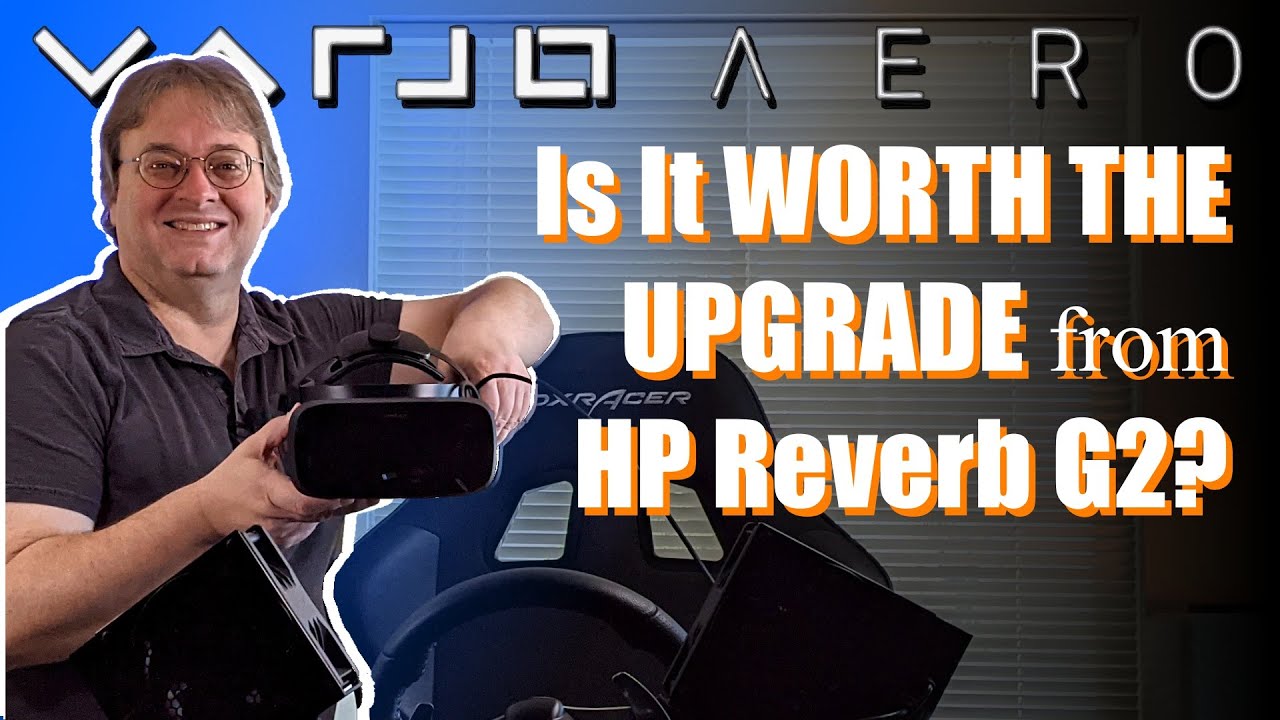
Nice review. Not sure I agree that he wouldnt use it for roomscale. I surely understand where he’s coming from, but what should I use then for roomscale? I never liked the G2 very much, for one it doesnt even support my 70 IPD and it was buggy as hell. Not going back to see pixels and mura in the 8kX so what alternative do we really have? It’s not like we have this magical ‘king of roomscale’ headset alternative out there.
I played and finished The Walking Dead Saints and Sinners with the Pimax xr oled instead of the varjo aero : D
But in general I use the aero for all other games 
This topic was automatically closed 60 days after the last reply. New replies are no longer allowed.