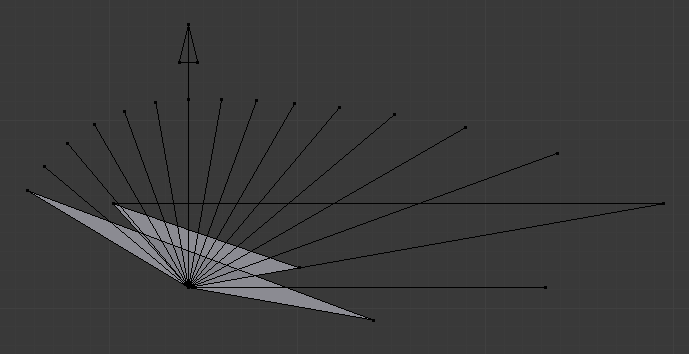
-If the numbers given are true, the engineers have already done things suggested in this thread, to give a little bit more IPD adjustment range at the lower end.
-If the lens consists of two discrete elements, we would definitely not want to file off any bit at the end, because then we would would break a probable seal around the edges, letting in moisture that ruins the optical properties, amply supplied by a warm face, and inevitably sucked in, both by capillary action, and cycles of heating and cooling (expansion/contraction/condensation).
I think we can all just agree that we want a clear image when looking through both eyes.
This is indeed archiveable if the centers of the bionic lenses are asperic I believe, due to the larger part of the lense is clear and without distortions from the concentric rings present in fresnels lenses.
Since there’s more low IPD range on this headset, the problem will 100% at the very least be better. (Assuming the lens sweetspot hasn’t shifted outward farther from the nose.)
Since the sweetspot of this new lens is also larger, this should help immensely as well. If Pimax has gone ahead and moved the lens sweetspot closer to the nose, the issue should pretty much be gone except maybe for a small percentage of very low IPD users.
Yep - as long as that is the case, we should be good, even with imperfect optical alignment. :7
Let’s hope so!
…
I’ll take the liberty to illustrate another comment I made above, in this post, whilst I’m typing, anyway…:
So (addressing any reader who gives a damn - not specifically the persons I am responding to with this post); Imagine the converging point of all those radial lines in that picture is the game camera for your right eye, and the vertical arrow is your view straight ahead…
The dead-end rays are spaced 10° apart, and are there to function as a rough protractor scale.
The wider of the filled triangles is your right eye horizontal Field Of View with the advertised p12k specs (100° to the right, plus 59° to the left), seen from above, and the narrower one is the equivalent in the p8k/5k series; The larger unfilled triangle, that extends from the latter, is the 8k/5k in parallel projections mode.
The far edge of each triangle is a representation of the game view plane - a cutsection of it. I want you to keep in mind that pixel columns along each of these view planes are equal width, and inherently equidistant.
Note that there is no direct illustrative mathematical relationship between the sizes of each triangle here - they are just drawn that way for visual clarity; And relative distances need to be treated for each one, on its own.
As you will no doubt have spotted by now, the distance along each of those far edges, between two points where it is intersected by two neigbouring radial lines (ten degrees, remember?), is significantly shorter at its middle point, than at either of its ends; The distances starts growing right away, more and more the farther away you get from the middle, and as it turns out, the last ten degrees of the p12k one crops off a longer stretch of the line, than all of the first 100 degrees together.
These lengths from the same line directly correlate to how many pixels an application need to render to a single flat viewplane, in order to fill them; I.e: The last ten degrees of FOV are more pixels, horizontally, than the entire first 100 degrees.
This is why we see such a performance hit, when playing in large FOV mode, and even more so when using Parallel Projections - just make the same comparison on that long horizontal line of the PP triangle…
So even if foveated rendering was not a thing, we’d definitely want rendering that takes this projection concern into account; And even then, if, say, we were using Dynamic Rate Shading to skip the shader work for 7 out of 8 pixels for those last ten degrees of the frame, we still have those skipped 7 pixels taking up memory for each render buffer.
You’ll also have concluded that it is impossible to reach 180° in PP mode, much less exceed it.
I think we’ll want rendering to multiple viewplanes, or segmented- or even better: actually curved -viewsurfaces, supported by VR runtimes, engines, and applications sooner, rather than later… :7