Nvidia is continuing on their path to look fool more and more every day, and to show how much they cheat on consumers, thinking we are a mass of braindead stupids that can be easily cheated to buy anything, at thrice the market value…
It just for the fact that old card may be able to use RT, but in fact RT need takes a s*hit tons of calculations so It will be very small RT effects.
Only tensors on 20xx cards are made for this purpose. Got a 2080 Ti and ran a few tests with RT images generations. It s many dozen time faster to generate this kind of images with RT only now.
The future is RT only with sparse voxel octree. We won’t reach that before 4-7 years I think, but this will just mean : Infinite resolution with perfect light on every surfaces.
Effects on the Crytek engine demo don’t look like small effects at all to me…reflections are everywhere and are very accurate, and anyway Radeon stream processors have always been better for certain types of applications, especially FP, compared to Nvidia.
Crytek just used it in the right way, not a la “Nvidia way to do it”
Ray tracing makes it possible to make beautiful images in a relatively simple manner compared to rasterizing. But if hardware support for it is limited to the few rtx 2070 and above out there, studios will still need to support rasterizing and all the hacks to make reflections, shadows and transparency work.
If a simpler version is made available for previous gen GPUs, then maybe studios can hope to make the full switch to ray-tracing in a couple of years. I think it’s always been in the plans to have it working on non-rtx cards, although maybe slow sales of RTX cards have accelerated that.
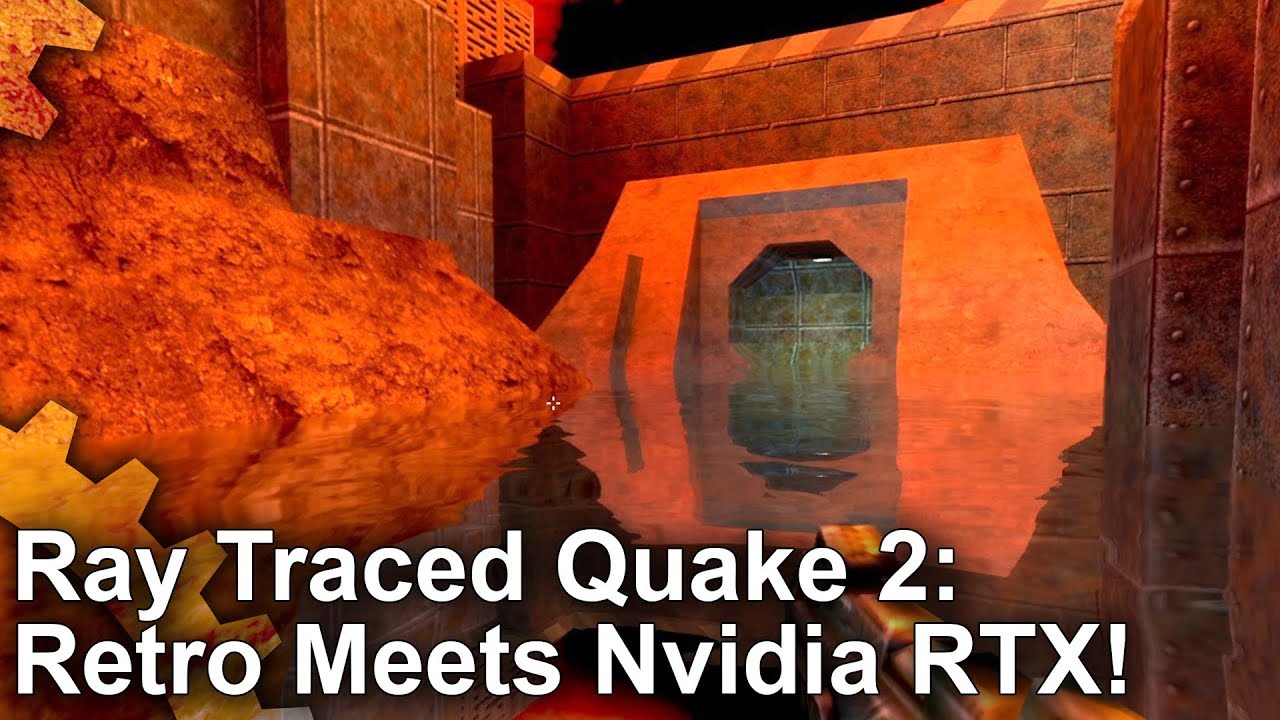
As for demos, I wouldn’t trust them. If you have good artists, you can make any engine look good. We’ll see how well this holds when more products come out. For me, the real value of RTX was made obvious when one guy adapted quake 2 to work with RTX.
It’s been adopted by NVidia since then and made really nice, but the demo was impressive even when the guy was working alone on it. I’d love a quake 2 with ray-tracing and VR! Ray-tracing could by the way generate images corrected for lens distortion right from start, removing the need for super-high resolution frame-buffers, which I hope could make this possible.
Ray-tracing has a number of variants. What RTX is doing is actually path-tracing, which I think is more costly than ray-tracing, but supports indirect illumination. It’s possible the Crytek demo does ray-tracing, not path-tracing. We would need a clearly lit indoor swimming pool to really see what the engine can do: soft shadows, reflection, transparency, refraction, caustics… The Crytek demo was really dark, and only really showed reflections.
It’s interesting nonetheless, but I would be surprised if non-RTX cards could compete with RTX for full-fledge ray-tracing and path tracing.
Keep in mind Amd already had open realtime ray tracing in “Radeon Rays”. Now Turing may have some hard coding to make it easier but at present Real time Ray Tracing = 1/2 fps.
Keep in mind that this Quake 2 RTX demo has been an open source Vulcan project for a very long time now, before RTX or Turing was released.
My 3gb 1060 can run the earlier builds of Q2VK, IE this demo at 1080p 60hz and that project uses a custom path tracer.
Nvidia has really just seized on the fact that this Dev’s latest build implemented tensor cores for the de noising process, which is cool, but not that cool. Nvidia has now gone in and added their fancy smoke effects, particles, etc.
This way, they as a corporation get to tout their fancy new tech as the “best” way to run this demo.
Its marketing spin, and folks eat it up. I have this demo on my machine (an earlier version.)