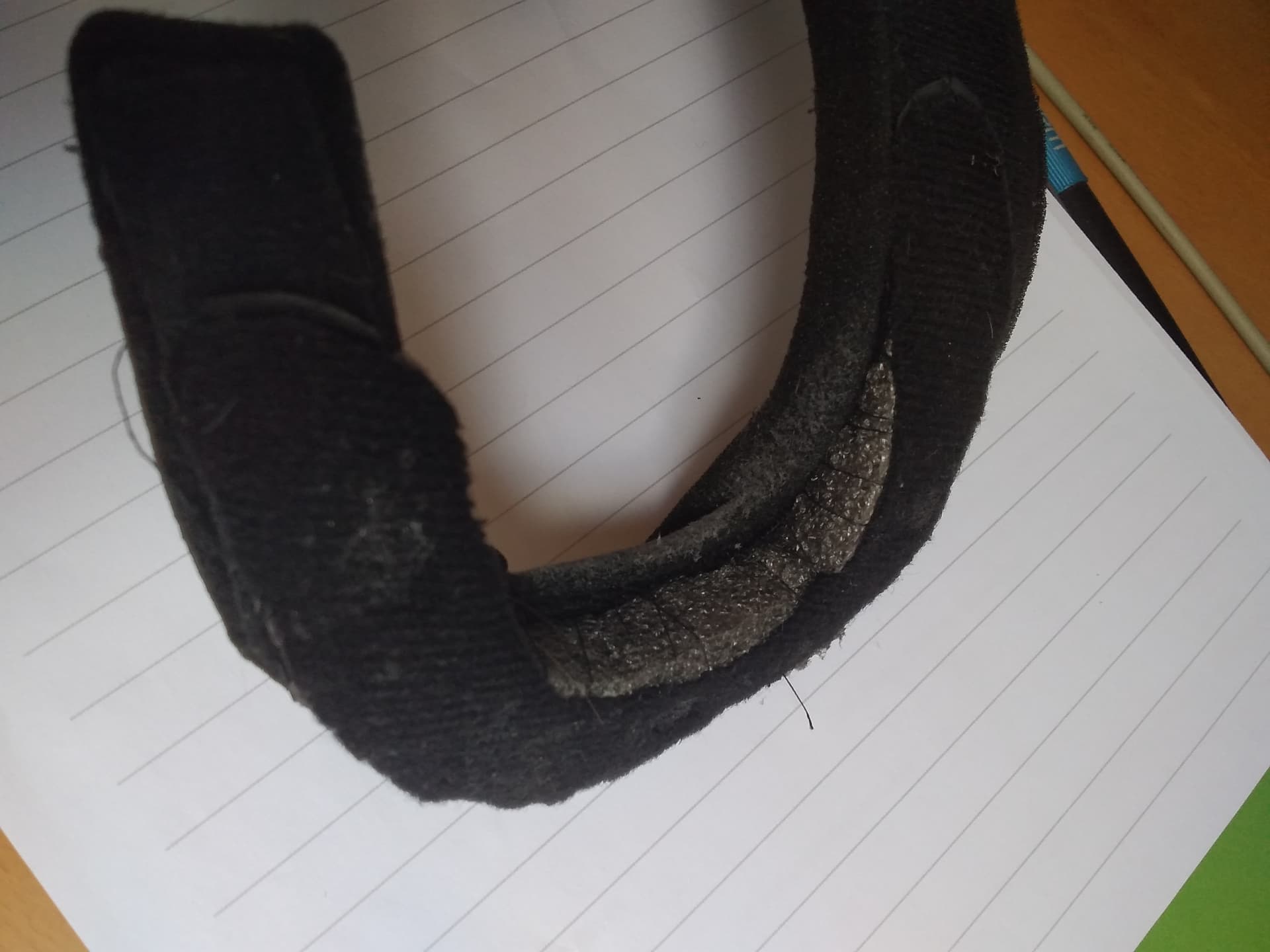
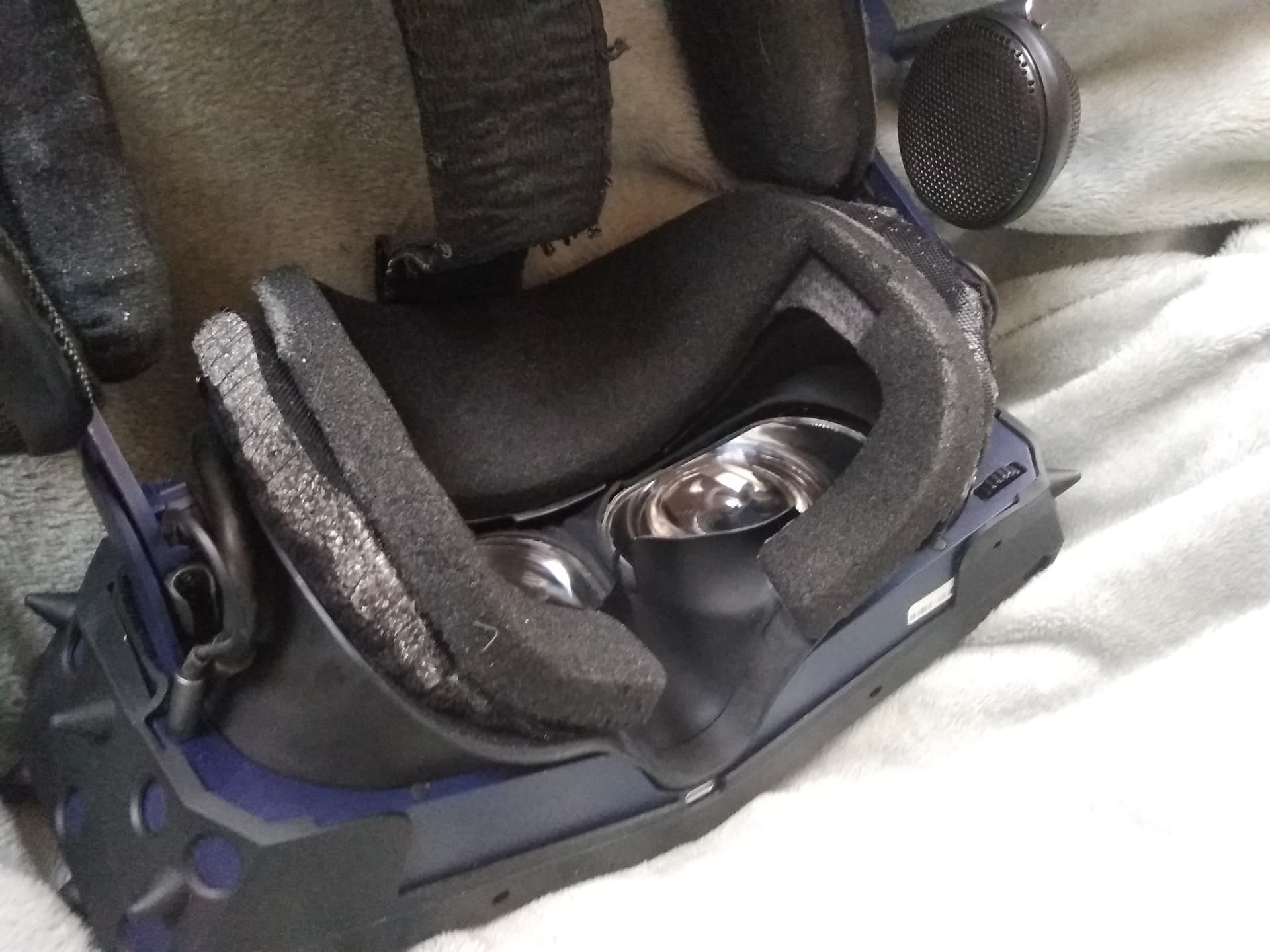
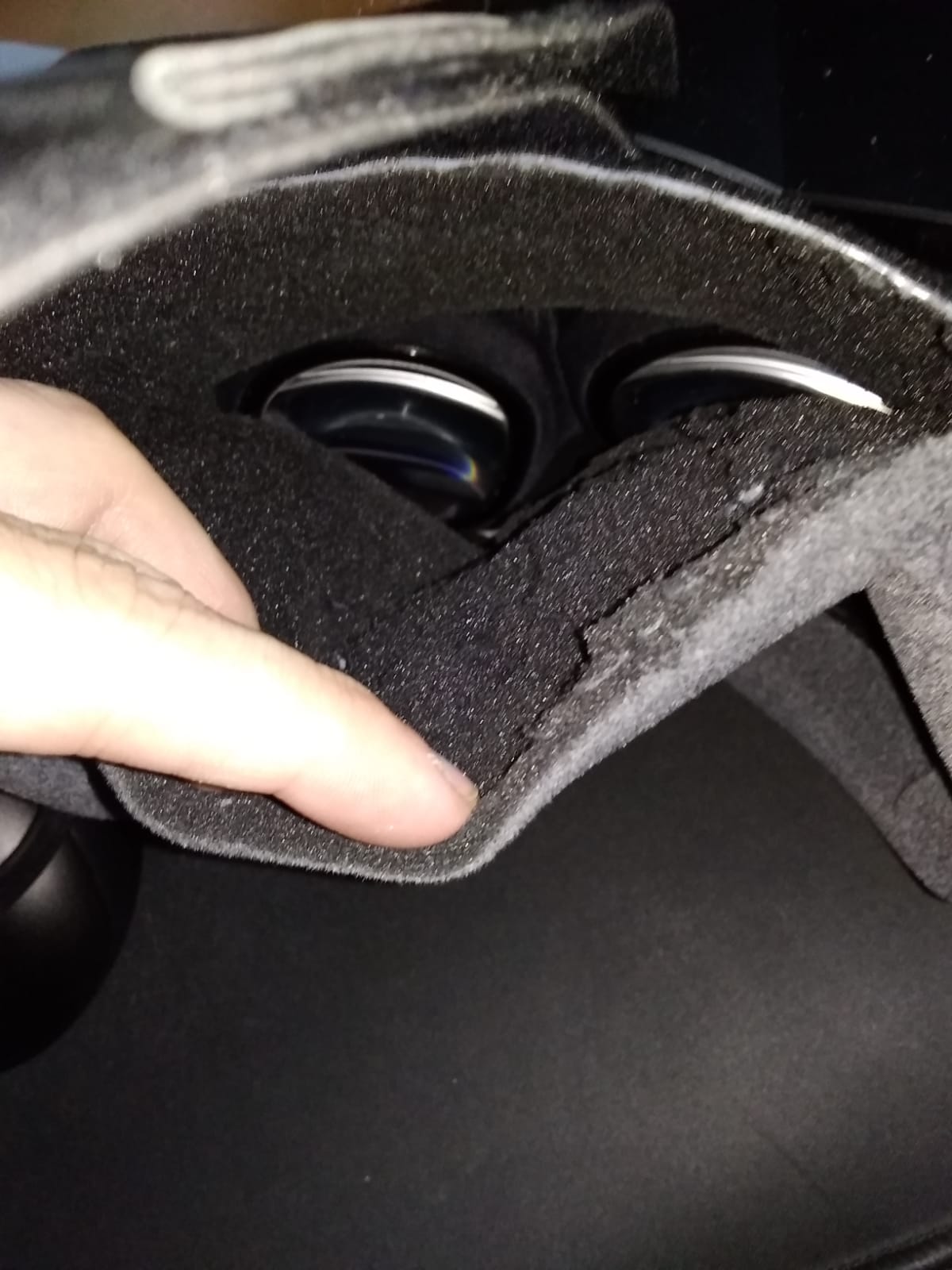
I received my Crystal Super UW last Tuesday and I will be returning it back for combination of what I estimate as defect, inherent design issue and my facial anatomy not being suited for this particular model. It was retested with my brother and both of us independently conclude that 8KX is overall better option for us still.
Before I do so I conducted series of tests to use this unfortunate situation to obtain more knowledge about the product, possible workarounds or root causes and spark a discussion to gather experiences and feedback from others to be offered to Pimax for the design of helpful accessories, next generation of headsets or even potential new optical engine under the current Super family. After all, they are the company trying to offer us the best high FOV high clarity headsets so important for combal flight simming. I will also offer Pimax cooperation in further testing and refer this topic in my ticket.
Quick summary before detailed explanation
The good:
- resolution, pixel fill and lens clarity is good, particularly improvement over 8KX past 40° (/80° total) each direction where 8KX starts to blur and past 60°/120° degrees is not really useful
- better contrast and colours that help to track target over terrain
- comfort (smaller form factor, feels lighter)
The bad:
- small useful FOV for someone with rather narrow face and deeper seated eyes (I will explain in detail below as focusable FOV <100° vs peripheral FOV)
- strong mura on my left eye panel, which I believe to be a defect as it is not present on the right panel under normal conditions
- extreme chromatic aberration starting to be noticeable 10° each direction, and being very strong since 30°
The useful FOV
Unlike 8KX, the Super UW does not seem to have canted lenses and it has strong impact on FOV limits, perhaps more with facial anatomy like mine.
I have rather narrow head, roughly 60mm IPD (self measure) and deeper seated eyes. The distance from my eyelid to eyebrow where forehead meets root of nose is approx. 2 cm and for my brother that I tested this on as well is about 1.8 cm.
From start the FOV on Super UW felt quite constricted compared to 8KX which I normally use on small mode of 120°, which was surprising. Even more surprising was my initial FOV test which I estimated around 90-95° HFOV.
Here is a table of measurements using two distinct methods - one when looking at the edge of the FOV trying to focus on object displayed there and the second one focusing eyes on centre and relying purely on peripheral vision to sense the motion of the markers in to FOV tester app.
Here are my and brother’s results in different headset positions (eye to lens distance, angle):
| Headset | Face setup | HFOV centered eyes | HFOV eye looking Towards edge of FOV |
|---|---|---|---|
| Crystal Super UW | gasket on, thin face cushion | 126 | 96 |
| gasket, no face cushion | 134 | 102 | |
| no gasket | 136 | 108 | |
| no gasket, canted to improve edge focus HFOV for one eye | 138 | 136 | |
| Crystal Super UW – brother | gasket on, thin face cushion | 128 | 96 |
| gasket, no face cushion | 136 | 98 | |
| no gasket | 136 | 100 | |
| no gasket, canted to improve edge focus HFOV for one eye | 138 | 136 | |
| 8KX | gasket on, thin face cushion | 158 | 158 |
| no gasket | 158 | 158 | |
| 8KX – brother | gasket on, thin face cushion | 158 | 158 |
The “canted” results are obtained by rotating the whole gasket-less headset for optimal canted angle and looking only through that particular eye.
My hypothesis why discrepancy of results happen in Super, but not so much in 8KX with canted lenses demonstrated in drawing:
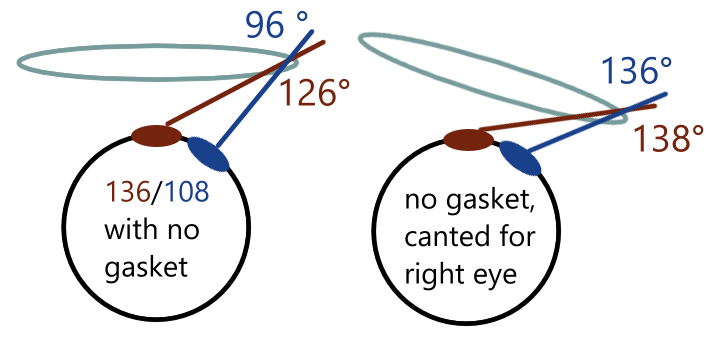
I understand that canting lenses/displays can have trade-offs, especially for binocular overlap. Those sensitive to overlap have been vocal about this and I believe current design reflects this. I want to spark a debate whether there is strong enough demand for return of canted lenses/displays, especially considering anatomy like mine. Could we ever get Super UW canted for those who are not sensitive to overlap, but are losing a lot of rendered FOV behind the lens?
Why I believe the focused FOV is the important metric, not the peripheral as much?
When you are using it in combat flight simulation, you are often looking behind and trying to see what exactly is there and what is it’s spatial attitude (is it friend or foe, does it have enough lead to start shooting or is it lagging etc.).
With the peripheral vision, you only notice big, vague shapes and motion. But when you try to look at it, it suddenly disappears from FOV behind the lens edge.
I propose to measure each headset by those two metrics independently as it conveys important information for the user according to his use case.
The mura
Since it is quite impossible to capture the mura on camera, I have created and approximation of it in digital painting application:
As you can see it is series of irregular, relatively thin stripes. It could possibly be what early reviewers of prototype called “tiger stripes” - up to them to confirm or disprove it if it is the same.
On my device, this is under normal condition only visible in the left eye. I found a partial workaround where by pushing/turning the headset to right which reduces the mura in the left eye. In extreme, it however introduces it in the right eye and also the reqired push results in a view that is far from centered (5-10° HFOV difference in each eye). Turning it other way makes the mura even stronger. There is also chromatic shift slightly to red. This is also true for the centered position, although to lesser extent. I tried the IPD compensation for left eye to figure out if it is misaligned, but all I achived was misalignment of L/R images causing double vision without really addressing the mura.
My QA sheet quotes at order 6 “mura grade 1” “Passed”. If I understad correctly grade 1 mura should be only visible against relatively uniform light background and not distracting. This is very distacting against sky even if not realy uniform and stil visible against lighter terrain. At this level it may also hamper a target recognition at further distances.
I have no idea if this is something that can happen due to shipping damage (a fall), my model had initial issue with IPD adjustment. When I first set my IPD (65->60mm) the motors were whining without anty result. Just before contacting tech support I also tried to adjust to higher IPD first. It worked, I heard a click as the mechanism realigned and then it worked. I informed pimax technician and he said this can happen during shipping.
But if the shipping damage is not the cause of the mura, the QA process to measuring might need reconsideration. E.g. if the pocess allows for aligning the headset for each lens individually it might unintentionally aply the trade-off workaround I mentiond resulting in false pass. I have not enough information to decide the root cause, so I will leave it to Pimax.
The chromatic abberations
These are rather straight forward. I made sure that I ahve headset properly centered (no CA in the centre).
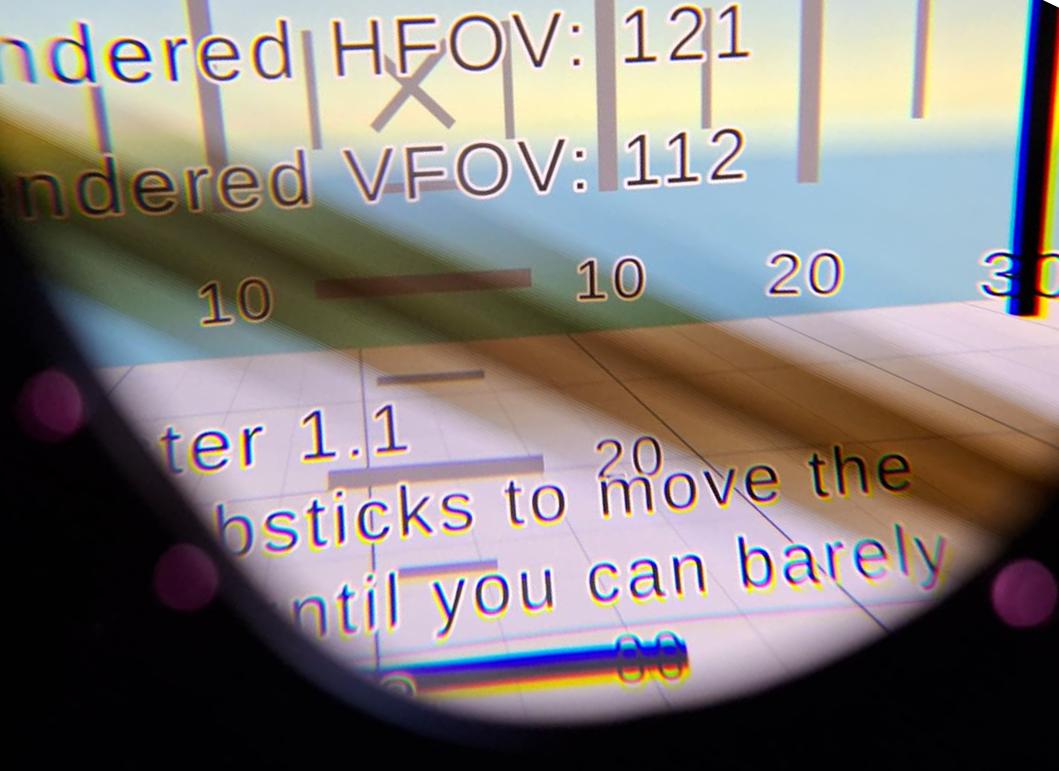
At 10° from center the CA is clearly noticeable, but not yet distracting. At 30° it’s way stronger than I ever seen in any optical device. When looking at the birds from Steam VR Home, those are not just lines on edge of silhouettes, but 3 distinct silhouettes - black, yellow and magenta.
I tried moving the lens nearer or further from the eye. The one thing that seem to reduce it noticably (still strong but not that extreme) was when I did the HFOV test for the canted lens/display.
The following photo is very imperfect, but representative in chromatic aberration strength to what I see in headset in normal conditions without canting it to optimal angle. It is possible to get photo with noticably lesser CA, but that would only representative of what I see with the canted angle.
Potential remedies that could be made
-
Easiest help for people with narrow head would be providing shaped foam wedges with velcro to improve facial fitting and prevent external light noise. Here is demonstration in photo:
-
Offer variants of face gasket with deeper (Z axis), but narrower (to sides) cutout so customers could select according their head shape. This is crucial when you cannot get your eyes close enough with thin face cushion.
Potentially proivide a 3D print file so users would have the exact gasket to headset interface correct, but could shape and print their own gasket to measure. -
The most costly and time consuming, but the most important to be done by Pimax and not user’s hack is to provide a canted version of optical engine.
-
Prioritize the focusable FOV over peripheral FOV.
-
I am convinced it would be useful to gather some anatomy statistics, determine critical variables and distinct patterns and build 2-3 variants of optical engines / facial accessories with those patterns in mind and with advice how to measure which one is for which user.