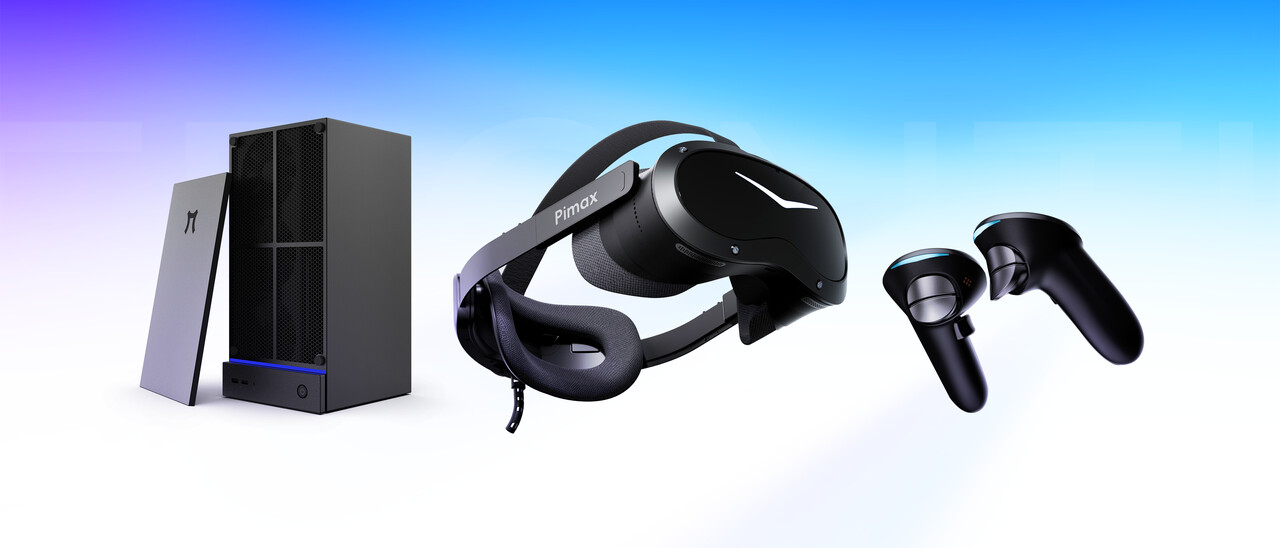
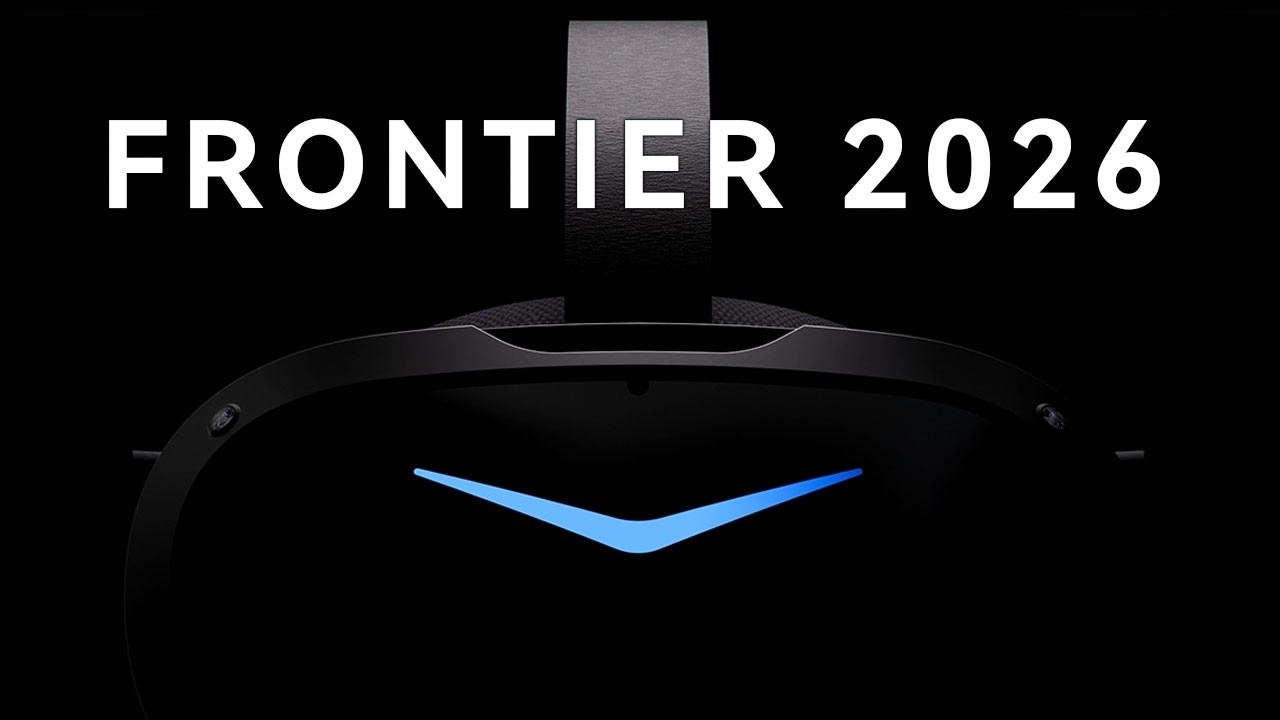
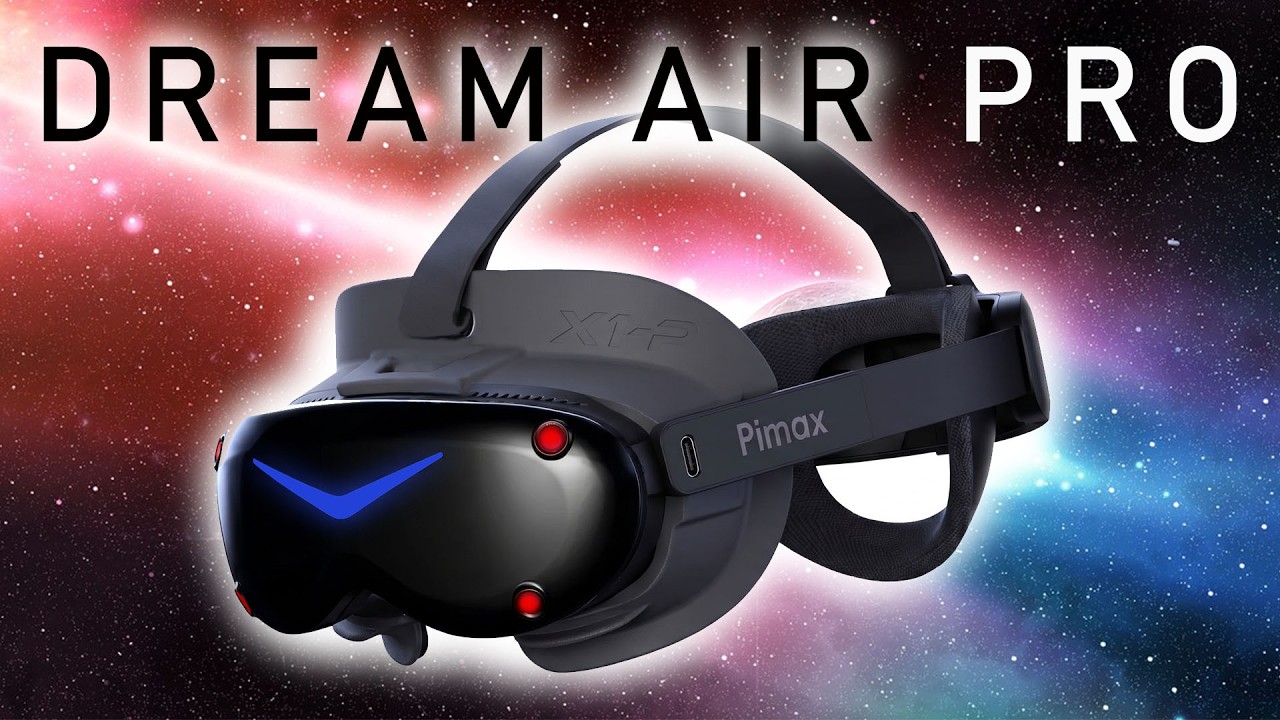
Have questions about the Pimax Crystal Pro, Ringless Controller and Spation? Ask us anything about the display, tracking, comfort, performance, software, or other features.
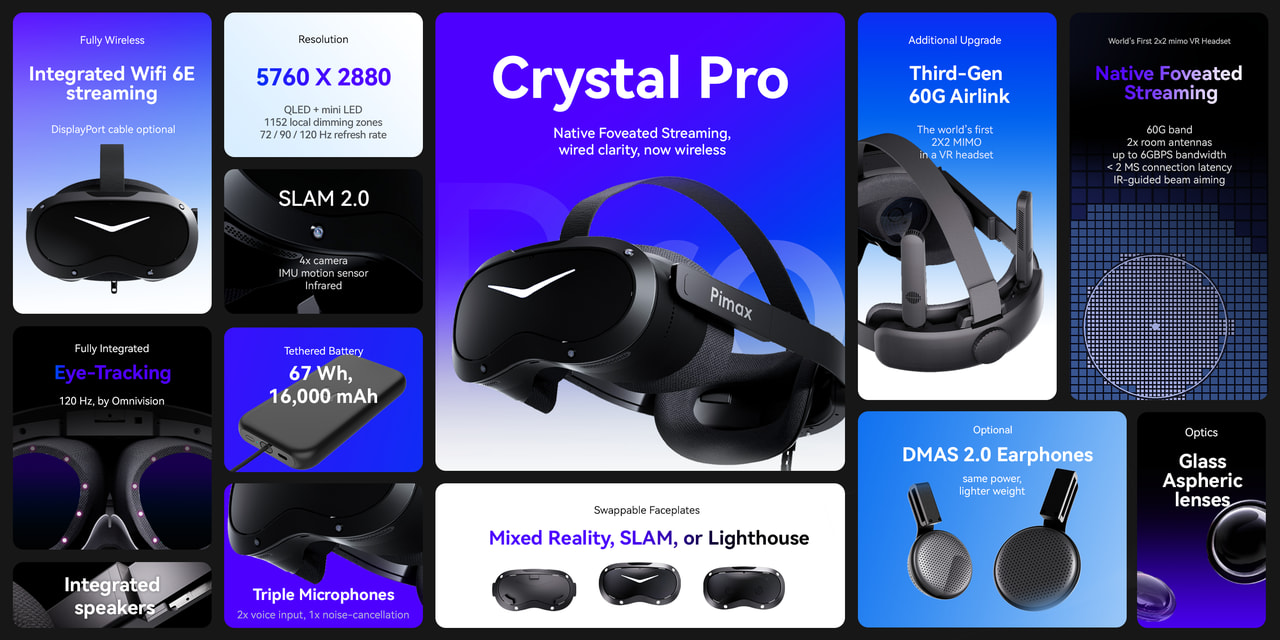
Will we have options to hard mount the battery to the headset with a short cable or hot swap the battery to avoid play interruptions? Will we be able to have more than one battery, or is it hard connected to the headset? Longer than 3 hour play sessions are more and more common now days with these headsets only lasting an hour or two hours at best, it would be great to be able to. If the battery is not hard connected will we be able to use our own batteries via type c or will it have to be specialized to the headset only with a priority connection?
Tracking questions
With the ability to swap face places between slam, mr and lighthouse, will we be able to use the lighthouse face plate wireless in either sold option or will we be required to use the 60g v3 to use wireless lighthouse face plate wireless? With the headset stating there will be an optional tether, will the headsets lighthouse faceplate be locked to the tether only?
Sound
It’s shown that the headset will have dmas 2.0 as an option. What is the default audio device on the headset as it is not shown or mentioned? Does it come out of the headset like the frame or does it not have any audio by default and requires use of headphones?
Compatibility
With this headset supporting lighthouse tracking via a swapped faceplate, does that mean it will still retain support for the index nuckles or the pimax sword controller while in lighthouse mode or will it be stuck with the default controllers. If it does support the knuckles or swords will the headset have the chips inside for native connection to those controllers or will dongles be required?
Does the 3rd gen 60G Airlink and Native Foveated Streaming have a path to the Dream Air / Dream Air SE? The Dream Air already has eye tracking and a detachable strap, so a rear-mounted module with battery and decoder feeding the USB-C input seems feasible. Is Cobb still in development as that module, and if not, is there any planned wireless option for Dream Air owners?
Will any of these features for the Crystal Pro be available or improve the situation for the OG Crystal? Especially the wireless and stand alone functionality.
When used wired with the display port cable, will the battery still be needed?
Will a generic display cable work, or will it needed a specific cable?
Also, when used wired, will the wi-fi wireless headset module be disabled?
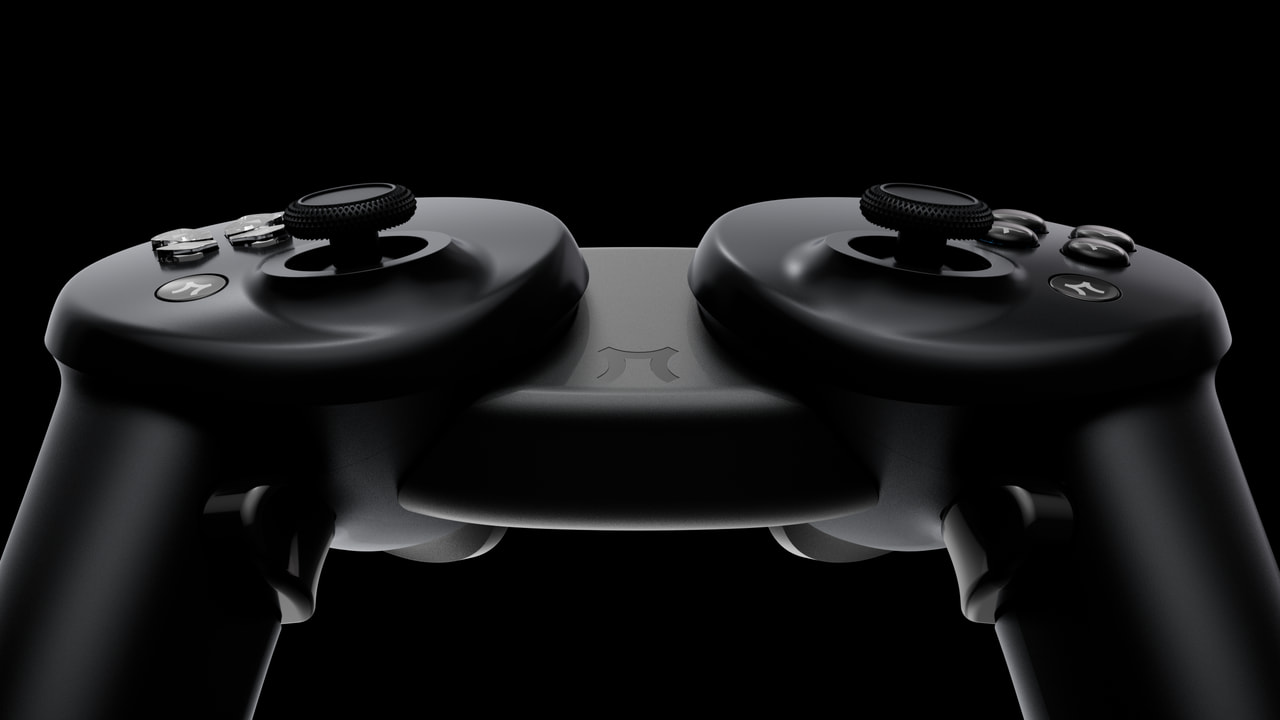
Will the controllers battery be replaceable?
Will the IPD mechanism manual or motorized?
You would hope so since it appears, with the exception of the eye tracking vendor being different, to be the exact same hardware except the case. Same panel, lenses and chip. Even if there are differences they should be absolutely trivial for Pimax to finally deliver on their OG Crystal promises. Better late than never Pimax!
Regarding the headstrap… Will Dream Air owner get the long awaited hard-headstrap with DMAS 2.0 and will the design be similar to the Pro (except battery and antenna mounts)?
Omnivision makes the hardware (cameras/sensors) for Tobii. I’m not sure the “eye tracking vendor” is really different. Tobii may still be driving the software for tracking in the Crystal Pro.
When will Pimax finally make a headset with a truly wide horizontal FOV, comparable to or exceeding that of the 8KX?
It has been a long time since the 8KX, and I’m disappointed that horizontal FOV no longer seems to be a priority for Pimax.
All of Pimax’s current headsets, including the latest additions to its lineup, have been extremely disappointing when it comes to horizontal FOV. At times, it feels like we’re actually going backward rather than making progress.
Even the Crystal Super Ultrawide, advertised with a 140° horizontal FOV, falls well short of what we need for sim racing. And that’s assuming it actually delivers 140°, as I barely get 122° from it.
For sim racing, this is a particularly important issue. With my current Crystal Super, I cannot see cars alongside me without turning my head. This takes away from both immersion and situational awareness, especially when racing wheel-to-wheel.
I would much rather have a 180°+ horizontal FOV, even at the expense of resolution and vertical FOV. In a racing simulator, peripheral vision is far more valuable to me than additional vertical coverage or maximum pixel density.
Why isn’t Pimax offering a headset specifically designed around this priority, with wider horizontal optics and lower resolution if necessary? Not everyone wants maximum pixels per degree at the expense of peripheral vision.
Pimax built its reputation on wide FOV. I would love to see that ambition return, with a headset designed to prioritize horizontal FOV above all else.
Is a genuinely wide-FOV headset with 180°+ horizontal coverage anywhere on Pimax’s roadmap?
I’ve read it will have adjustable eye relief, is this confirmed? Will it offer granular eye relief adjustment like Index or Vive Pro?
It’s incredibly important for near eye devices like VR headsets and something your current models sadly lack, which can have a detrimental effect on the user experience especially with aspherical lenses
I was watching YouTube this morning and saw this dubbed video from France. How accurate are these updates, or is this more of a “wishful thinking” guess? I just don’t want to get super excited about false info.